
ALL ARTICLES AND INSIGHTS
Explore strategy, markets, and business perspectives.

Where Your Margin Actually Goes
Top-line revenue hides silent margin erosion. Discover why import duties, platform fees, and off-invoice deductions quietly eat your Asian market profits.

Two Price Lists That Look Aligned May Not Be
Comparing competitor prices across Japan and Singapore can lead to misleading conclusions when tax treatment is not consistent. Although both markets require consumer-facing prices to include tax, internal brand and distributor price lists may use different pricing bases.

Most Shoppers Don’t See the Prices You Benchmarked
Online competitor research captures only part of Singapore’s retail market. Discover why brands need to examine both e-commerce listings and physical retail shelves to understand local price positioning, identify relevant competitors and make better-informed pricing decisions.

A Price Index That Isn't Refreshed Is a Historical Record, Not a Pricing Strategy
A Price Competitiveness Index is designed to be refreshed, but most organizations treat that as a scheduling detail rather than a resourcing decision. Here is why refresh cadence needs an owner before the first report even ships, especially across multiple markets.

A Competitive Set Built on the Wrong Comparisons Is Worse Than No Data at All
A Price Competitiveness Index is only as reliable as the competitors used to build it. The step executives scrutinize least — matching competitors by type and format — is the one most likely to silently distort every recommendation downstream. Here is why that matters before trusting the number.
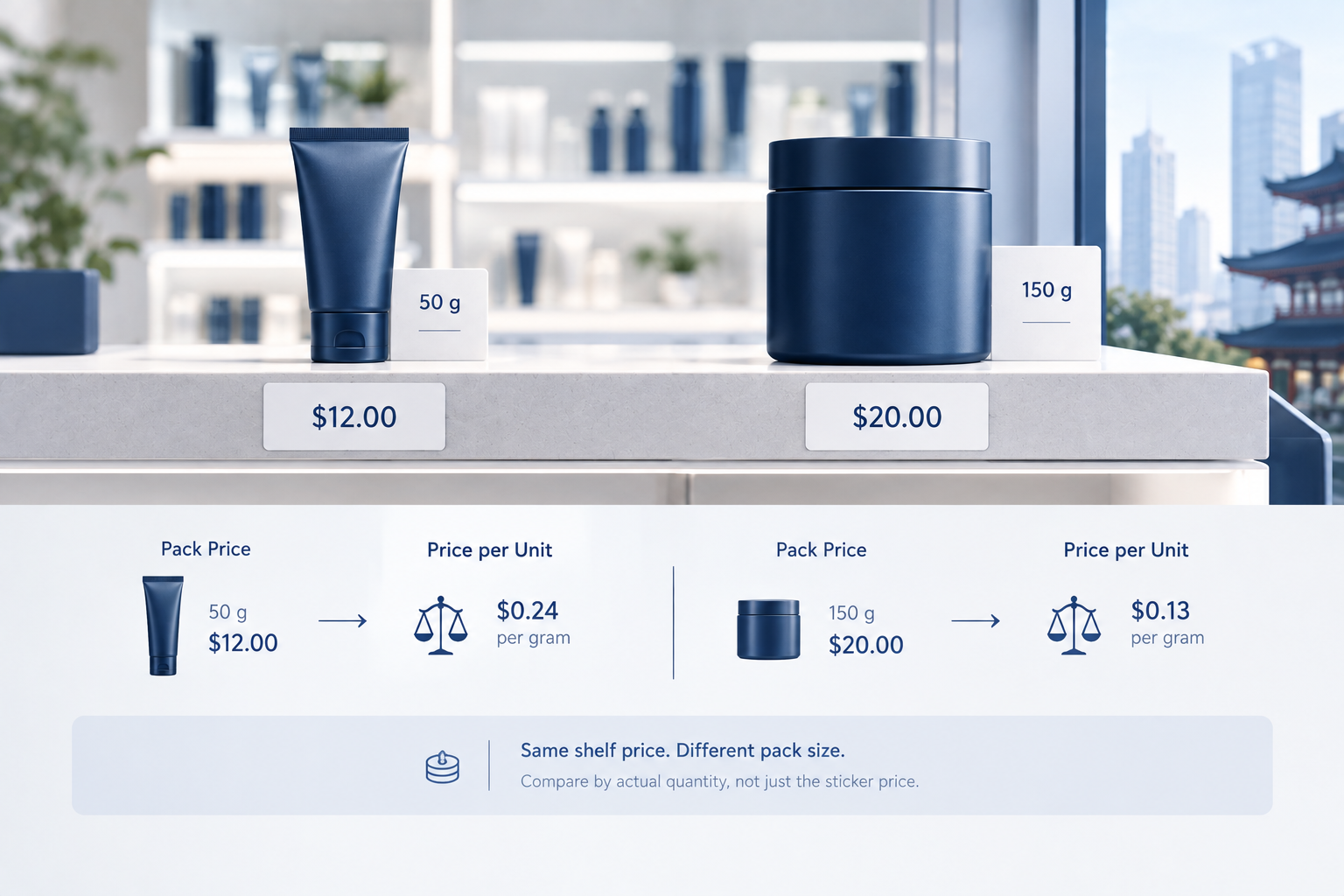
Comparing Sticker Prices Across Different Pack Sizes Is Comparing the Wrong Number
Comparing sticker prices alone can give a misleading view of competitive positioning. Normalize prices by pack size to understand what consumers are actually paying per unit.

Strong Sales at a Premium Price Can Mean You Are Underpriced, Not Positioned Correctly
Strong sales at a premium price may signal that customers are willing to pay more. Learn how to interpret price and volume together to identify potential margin opportunities.

Your "Best-Seller" Isn't the Same Product in Every Market
When entering a new Asian market, assuming the same flagship product will anchor pricing can lead to misleading benchmarks and poor pricing decisions. Before building the comparison, confirm which SKU actually leads in the target market.

The Anchor You Used Last Market Is Probably the Wrong One This Time
The pricing benchmark that worked in one Asian market may be the wrong reference for the next. Best-selling SKUs, relevant competitors, and channel dynamics change from market to market, yet expansion teams often carry forward the anchors from previous pricing exercises. The result can be a precise-looking comparison built on the wrong reality. Before setting a price, re-establish the right product and competitor anchors for the market in front of you.